Every capacitor symbol on a schematic answers one question before any value does: does this part have a polarity? The two parallel lines are the plates, the leads are the connections to the rest of the circuit, and whatever else is drawn on the symbol tells you which kind of capacitor it is.
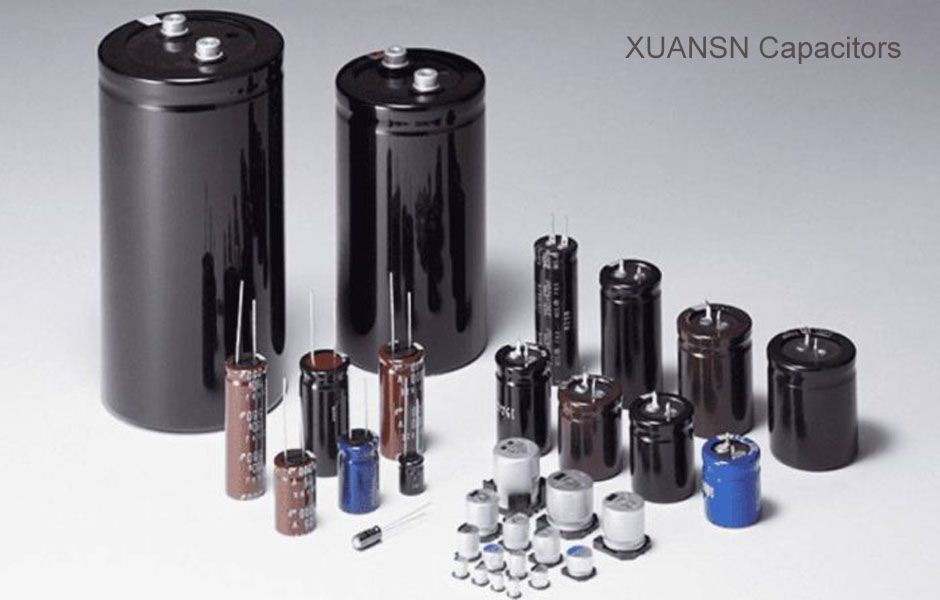
The parts those symbols stand for rarely look like them. Here are four taken from our own production line, from a 680 µF electrolytic to a 104 ceramic disc:
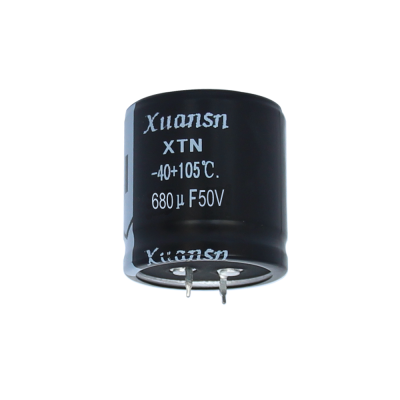
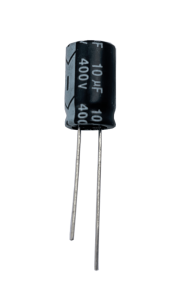
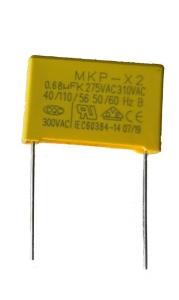
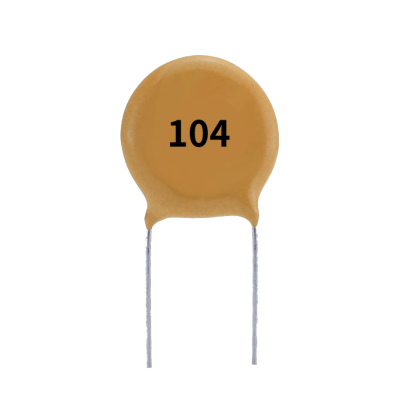
Both the drawing and the part carry the same information. What differs is how you read it.
How to draw the capacitor symbol?
The base symbol is two parallel lines with a lead on each side. The lines are the plates and the gap between them is the dielectric. Every addition to that shape is a qualifier, not decoration.
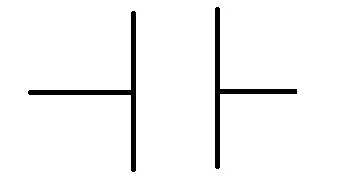
How to classify the circuit symbols of capacitors in the circuit?
Schematic symbols split into three groups by what the part can do. The drawing convention for each is distinct enough that you can identify a capacitor from the symbol alone.
Fixed capacitors
A fixed capacitor has one value set at manufacture. Its symbol shows the type and never the value, so ceramic, film and electrolytic parts all use the same base shape with small variations between them.

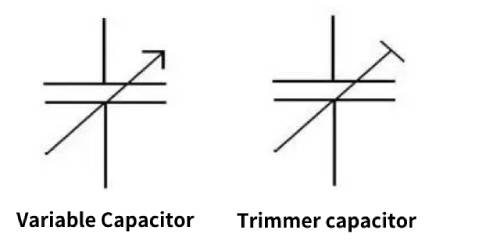
Variable and trimmer capacitors
An arrow drawn diagonally through the plates marks a capacitor whose value can be adjusted. A plain arrow means a variable capacitor, the kind used for tuning. A T-shaped end on the arrow means a trimmer, set once during calibration and left alone after that.
Polarized capacitors
A polarized symbol marks one plate with a plus sign and draws the other as a straight or curved line. Electrolytic and tantalum capacitors use this form. Orientation matters more here than anywhere else on the schematic, because a reversed electrolytic fails.

How to distinguish the positive and negative poles of electrolytic capacitors?
The symbol only tells you that a part is polarized. The physical part tells you which lead is which, and the marking changes with the package.
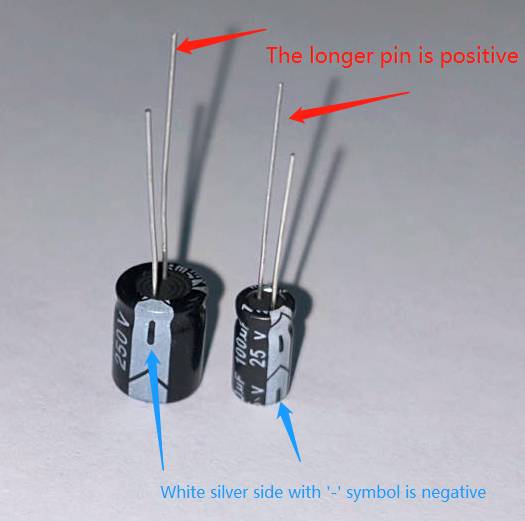
On a radial or axial electrolytic, the longer lead is positive. The stripe down one side of the can, printed with a minus sign, marks the negative terminal. Our article on capacitor polarity covers the same markings on other packages.
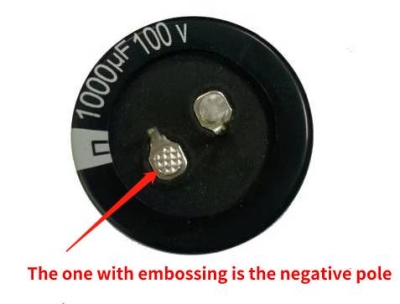
Snap in Capacitor
The stripe is on the can here too. Where it is hard to see, turn the part over: the terminal with the embossed face is the negative one.
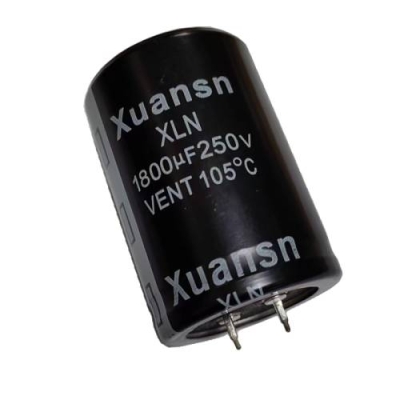
Screw Terminal Capacitor
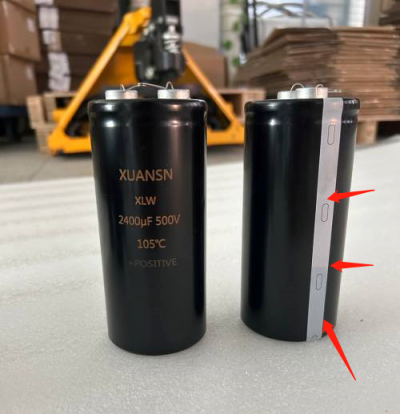
Screw-terminal cans carry the stripe on the body next to the matching stud, and most series also print plus and minus beside the terminals on top.

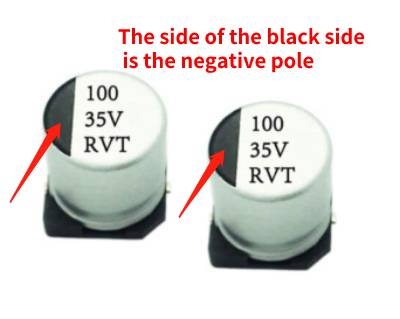
Chip Aluminum Electrolytic Capacitors
The marking sits on the base. The black segment of the base plate is under the negative terminal.
What this means when you are specifying
Capacitor symbols divide into polarized and non-polarized forms, and the drawing follows the construction. Electrolytics and tantalums are polarized and have to go in the right way round. Ceramic and film parts are not, and can be connected either way. If you are still working out which of the two a position needs, our comparison of DC and AC capacitors covers where each type belongs.
Xuansn manufactures radial, SMD, snap-in and screw-terminal aluminum electrolytic capacitors, and every one carries the polarity marking described above. If a schematic reference leaves you unsure which part it calls for, send us the symbol and the working voltage and we will match it to a series. Start from the aluminum electrolytic capacitor range.