A polarized capacitor dropped into an AC circuit is a short circuit waiting for its moment. That is the practical difference between a DC capacitor and an AC capacitor, and it decides which one you are allowed to put in a given position.
The difference comes down to what the oxide layer does when the voltage reverses.
Why a Polarized Capacitor Cannot Go Into an AC Circuit
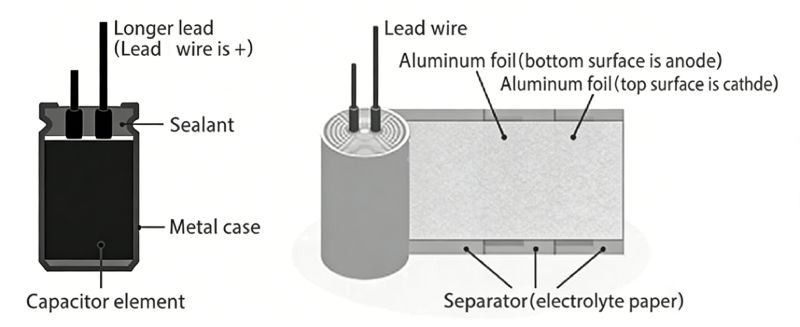
A DC electrolytic builds its dielectric in service. The anode foil carries a thin oxide layer formed electrochemically, and that layer is the insulation between the two plates. Reverse the voltage and the oxide is stripped away rather than rebuilt, the electrolyte starts conducting, and the part vents and usually fails loudly.
AC swings the voltage through zero every half cycle. A polarized part sees that reversal thousands of times a minute, so the oxide never gets a chance to recover. This is why the polarity marking matters more than the capacitance value in this particular decision.
Two Ways to Build a Non-Polarized Capacitor
There is more than one route to a capacitor that does not care which way you connect it, and the difference shows up in what the part is good for.
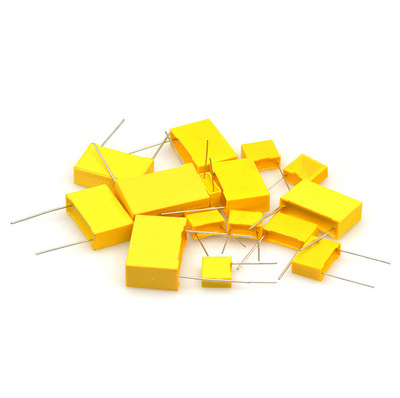
A film capacitor gets there through its construction. Metallized polypropylene or polyester film is wound into a cylinder, with no oxide layer to destroy, so nothing in the structure is directional. These are the parts behind motor-run, power-factor correction and mains filtering duties.
A non-polarized electrolytic gets there by using two anodized foils facing each other, so whichever way the voltage goes, one of the two oxide layers is being reinforced rather than stripped. The trade is capacitance density against voltage and life: far more microfarads per can than film, but a lower voltage ceiling and a shorter service life. Our guide to bipolar electrolytic capacitors works through that structure in more detail.

Reading the Markings Before You Solder
The polarity marking is the first thing to look for on an electrolytic, and its absence tells you just as much.
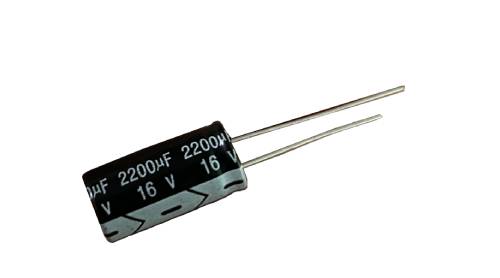
- A stripe down one side, usually with a minus sign, marks the negative terminal on a radial or axial electrolytic.
- A plus sign printed beside one lead appears on some series instead.
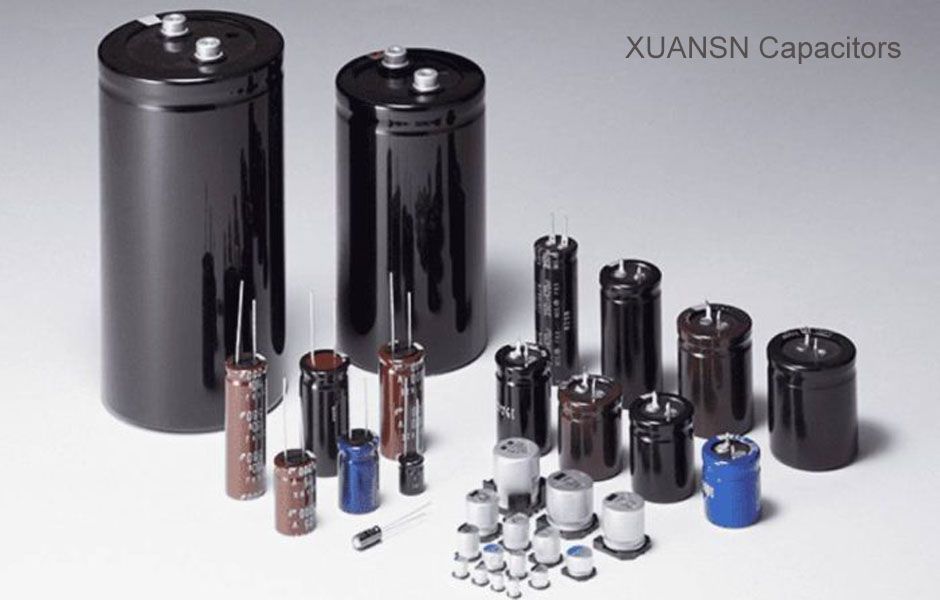
- Snap-in and screw-terminal cans mark the negative terminal near the matching pin, and the can body may be isolated from both terminals.
- An AC rating printed on the body, such as 450 VAC, means the part is rated for continuous alternating voltage. A DC electrolytic never is.
You will not find a polarity marking on film or ceramic parts.
| Type | Polarity | Typical duty | Marking |
|---|---|---|---|
| Aluminum electrolytic (DC) | Polarized | Rectifier smoothing, DC link | Stripe or plus sign |
| Non-polarized electrolytic | None | Audio crossover, small AC duty | Often marked NP or BP |
| Metallized film | None | Motor run, PFC, mains filter | AC voltage rating |
| Ceramic | None | Decoupling, HF filtering | None |
Where Each Type Actually Belongs
DC capacitors do the bulk work in power conversion: smoothing a rectifier output and holding up a DC link through a load step. Practically every high-capacitance electrolytic in a power supply sits in one of those positions, and each one is a polarized part.
AC capacitors sit where the voltage genuinely alternates. Single-phase induction motors need a run capacitor that stays in circuit continuously, plus a start capacitor switched in briefly for extra torque. Mains filters and power-factor correction banks sit across the line and see alternating voltage for their whole service life.
There is one grey area worth naming. An AC-rated film capacitor can be used in a DC circuit and will work normally. The reverse is not true, and that asymmetry is the whole point of the marking.
Inverters and UPS units put both kinds in the same box. The DC link is stacked with polarized electrolytics chosen for capacitance and ripple, while the output filter may use film parts if the load is inductive or the waveform is not a clean sine. Matching the part to what the node actually does is the first decision in the whole process, ahead of any value calculation.
What the Mistake Looks Like in the Field
A polarized electrolytic wired backwards usually announces itself. The electrolyte boils, pressure builds, and the vent at the top of the can opens. Sometimes the part survives long enough to look fine and then fails months later, which is worse, because by then it is buried inside a product that has already shipped.
The quieter failure is a capacitor that is correctly polarized but under-rated for ripple current. That one shows up as a can running hot and drying out early rather than failing outright, and it is covered in more depth in our capacitor selection guide.
Questions That Come Up
Can I use an AC capacitor in a DC circuit?
Yes, if it is a film or ceramic type. It will work, and it is usually a safe substitution because the part is built for a harder duty. You give up capacitance density, so the physical size may grow.
Can I use a DC electrolytic in an AC circuit?
No. The reversed half of every cycle destroys the oxide layer. Even briefly, and even at low voltage, that is the failure mode the polarity marking exists to prevent.
How do I tell a non-polarized electrolytic from a polarized one?
Look for the stripe or the plus sign. If neither is present and the part is an electrolytic, it is a non-polarized type, usually marked NP or BP. Our article on capacitor polarity goes through the markings in more detail.
Where Xuansn fits
Xuansn manufactures aluminum electrolytic capacitors in both polarized and non-polarized versions, across radial, SMD, snap-in and screw-terminal formats. If you are not sure which type a position needs, send the working voltage, whether the voltage reverses, and the ambient temperature, and our engineers will match a series to the circuit. Start from the aluminum electrolytic capacitor range or reach us through the contact page.