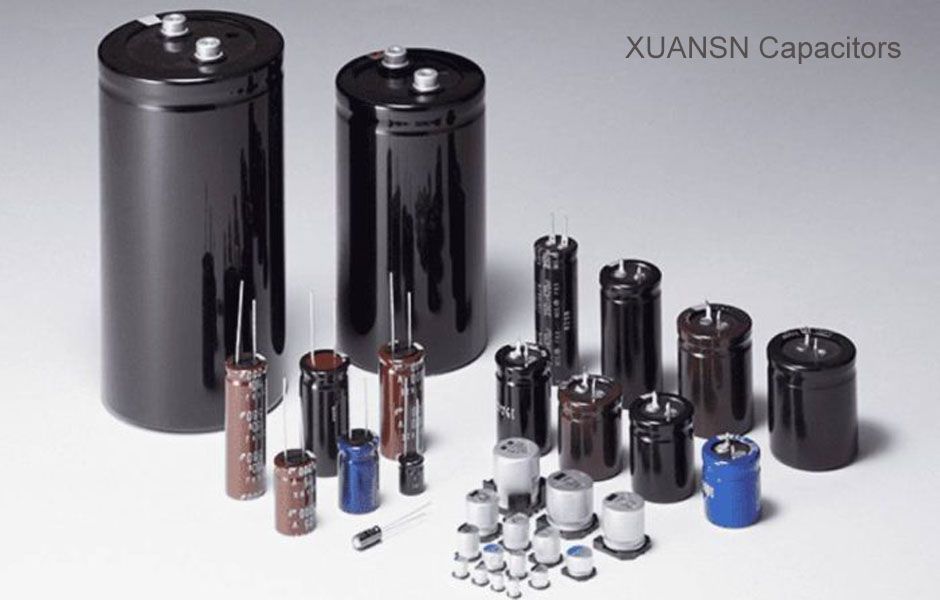
🔹 What Is a Capacitor?
A capacitor is a fundamental electronic component that stores electrical energy in an electric field. It is widely used in almost all electronic circuits to regulate voltage, filter signals, and ensure stable operation.If you are wondering what is a capacitor, the simplest definition is this:
👉 A capacitor temporarily stores energy and releases it when needed.
From power supplies to air conditioners, capacitors play a critical role in modern electronics.
🔹 What Does a Capacitor Do?
Capacitors perform several essential functions in electronic circuits. Understanding what a capacitor does helps explain why it is used everywhere.
Capacitors perform several essential functions in electronic circuits. Understanding what a capacitor does helps explain why it is widely used in modern electronics.
1. Energy Storage
Capacitors store electrical energy and release it quickly when needed, making them ideal for short-term power support.
👉 What is energy storage?
Energy storage is the ability of a capacitor to hold electrical charge and deliver it instantly when the circuit requires it.
👉 How it works:
- Electrical energy is stored in an electric field between two plates
- The capacitor charges when voltage is applied
- It discharges rapidly when energy is needed
👉 Where it is used:
- Power backup systems
- Flash cameras
- Pulse circuits
2. Voltage Stabilization
Capacitors are used to stabilize voltage and reduce fluctuations in electronic circuits.
👉 What is voltage stabilization?
Voltage stabilization is the process of smoothing out voltage variations to maintain a steady and reliable power supply.
👉 How it works:
- The capacitor absorbs excess voltage (charging)
- It releases energy when voltage drops (discharging)
- This smooths out ripple and noise
👉 Where it is used:
- Power supplies
- Voltage regulators
- DC-DC converters
3. Signal Filtering
Capacitors filter unwanted signals and noise from electrical circuits.
👉 What is signal filtering?
Signal filtering is the process of removing unwanted frequencies from a signal to improve performance.
👉 How it works:
- Capacitors block or pass signals depending on frequency
- High-frequency noise can be bypassed to ground
- Low-frequency signals can be filtered out
👉 Where it is used:
- Audio systems
- Communication circuits
- Power filtering circuits
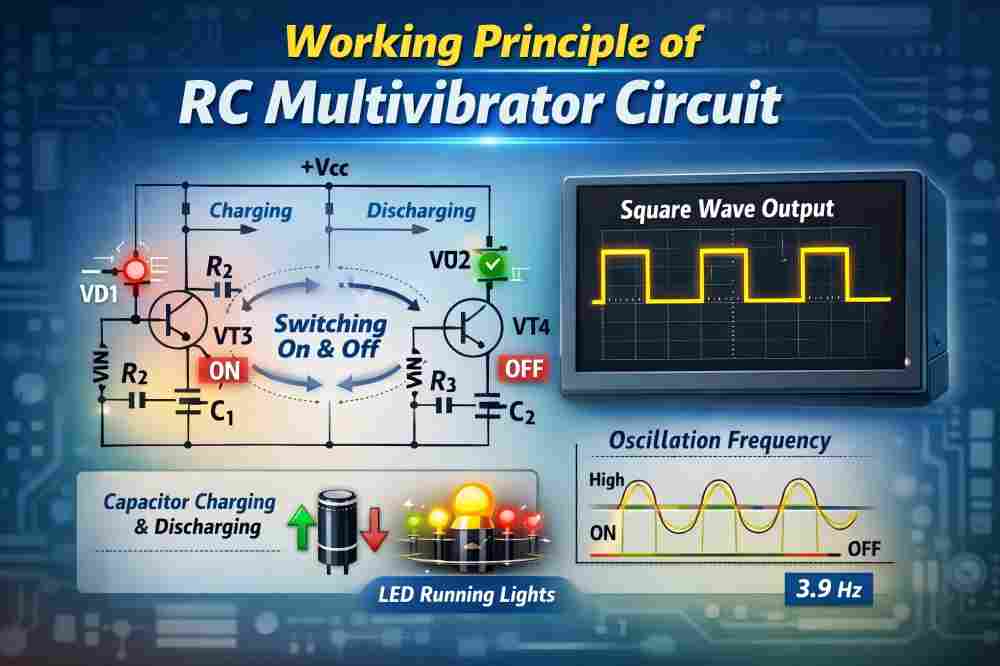
4. Timing Control
Capacitors are used to control timing and delays in electronic circuits.
👉 What is timing control?
Timing control is the ability to create delays or oscillations using charge and discharge cycles.
👉 How it works:
- Capacitors charge through resistors
- The charging/discharging time determines delay
- This creates timing intervals or oscillations
👉 Where it is used:
- Oscillator circuits
- Timer circuits
- Pulse generation
⭐ 5. Signal Coupling
Capacitors are widely used for signal coupling, especially in audio and communication circuits.
👉 What is coupling?
Coupling is the process of transferring an AC signal from one stage of a circuit to another while blocking DC components.
👉 How it works:
- The capacitor allows AC signals to pass through
- It blocks DC voltage between circuit stages
- This prevents interference and protects components
👉 Where it is used:
- Audio amplifiers
- Communication circuits
- Signal processing systems
🔹 How Does a Capacitor Work?
To understand how a capacitor works, you need to look at its charging and discharging process.
Imagine a capacitor as a tiny energy “buffer” inside a circuit—constantly balancing, storing, and releasing energy to keep everything running smoothly.
⚡ Step 1: Charging — Energy Starts Building Up
When a voltage is applied, electrons begin to accumulate on one plate of the capacitor. At the same time, electrons are pulled away from the opposite plate.
👉 What’s happening here?
- One plate becomes negatively charged
- The other becomes positively charged
- No current flows through the capacitor itself
Instead, something more interesting happens…
⚡ Step 2: Energy Storage — The Invisible Field
Between the two plates, an electric field forms. This field is where the energy is actually stored.
👉 Think of it like this:
It’s not the electrons themselves that store the energy, but the force between them.
- The stronger the voltage → the stronger the field
- The stronger the field → the more energy stored
👉 This is what makes a capacitor different from a battery.
⚡ Step 3: Discharging — Energy Released Instantly
When the circuit needs energy, the capacitor releases its stored charge.
- Electrons flow back through the circuit
- Energy is delivered quickly
- The electric field collapses
👉 This happens extremely fast—often in microseconds.
🔁 The Continuous Cycle
In most circuits, this process repeats continuously:
Charge → Store → Discharge → Repeat
This cycle allows capacitors to:
- Smooth voltage
- Filter signals
- Support rapid energy demands
🎯 A Simple Analogy
👉 Think of a capacitor like a water tank with a flexible membrane:
- Charging → water fills one side
- Storage → pressure builds across the membrane
- Discharging → water flows out instantly when needed
👉 It doesn’t create energy — it just stores and releases it efficiently
🚀 Why This Matters in Real Circuits
Because capacitors can charge and discharge so quickly, they are essential for:
- Power stability
- Signal processing
- High-speed electronics
Without capacitors, most modern electronic devices simply wouldn’t function properly.
🔹 What Is a Capacitor Made Of?
Despite their seemingly compact size, capacitors possess a remarkably simple structure, consisting primarily of three indispensable core components:
- Two Conductive Plates: Typically composed of metals such as aluminum, copper, or tantalum, these plates are responsible for accumulating and holding positive and negative charges, serving as the core medium for energy storage.
- Dielectric Material: An insulating layer sandwiched between the two plates; common materials include ceramics, films, electrolytes, and mica. Its primary function is to electrically isolate the charges and establish an electric field.
- Leads/Terminals: Used to connect the capacitor to an electrical circuit, thereby enabling the processes of charging, discharging, and energy transfer.
Among these components, the dielectric material directly determines the capacitor’s critical performance characteristics—including its capacitance, rated voltage, intended applications, and service life.
🔹 Types of Capacitors
There are several types of capacitors, each designed for specific applications.
Electrolytic Capacitors
- High capacitance
- Polarized (must be connected correctly)
- Common in power supplies
Ceramic Capacitors
- Small and inexpensive
- Non-polarized
- Ideal for high-frequency applications
Film Capacitors
- High stability and reliability
- Used in industrial and audio applications
Supercapacitors
- Extremely high energy storage
- Used in backup power and energy storage systems
🔹 What Are Capacitors Used For?
Capacitors are versatile components used in almost every electronic device. Their main applications include:
- Power Supplies
Capacitors smooth voltage and reduce ripple in power supplies, ensuring stable output for devices like adapters, LED drivers, and computer motherboards.
- Air Conditioners (HVAC Systems)
Capacitors help start and run motors efficiently in air conditioners and HVAC systems, improving performance and energy efficiency.
- Electric Motors
Used for starting and running electric motors in appliances, industrial machines, and fans, providing reliable torque and smooth operation.
- Consumer Electronics
Found in smartphones, TVs, computers, and gaming consoles, capacitors filter signals, store energy, and stabilize voltage for sensitive electronics.
- Audio & Communication Circuits
Capacitors enable signal coupling and decoupling, block DC while passing AC signals, and maintain audio quality in amplifiers, speakers, radios, and communication devices.
- Lighting Systems
Used in LED drivers, fluorescent ballasts, and smart lighting systems, capacitors stabilize current, reduce flicker, and improve lifespan of lights.
- Energy Storage
Capacitors store energy for backup systems, UPS devices, camera flashes, electric vehicles, and renewable energy systems like solar inverters.
- Timing & Oscillation Circuits
Control timing, frequency, and oscillations in clocks, timers, radios, signal generators, and microcontrollers for precise electronic control.
- Power Factor Correction
Industrial capacitors improve power factor, reduce electricity costs, and enhance efficiency in motors, HVAC systems, and large-scale industrial equipment.
🔹 Do Capacitors Have Polarity?
Some capacitors have polarity, while others do not.
- Polarized capacitors (e.g., electrolytic)
→ Must be connected correctly (positive and negative terminals) - Non-polarized capacitors (e.g., ceramic, film)
→ Can be connected in any direction
⚠️ Incorrect polarity can damage the capacitor or cause failure.
🔹 Capacitor vs Battery
| Feature | Capacitor | Battery |
|---|---|---|
| Energy storage | Short-term | Long-term |
| Charge speed | Very fast | Slow |
| Discharge speedDischarge speed | Very fast | Controlled |
| Usage | Instant power support | Continuous power supply |
👉 Capacitors are ideal for quick energy bursts, while batteries are better for long-term energy storage.
🔹 How to Choose the Right Capacitor
Choosing the right capacitor is critical for performance and reliability.
Key factors to consider:
- Capacitance (µF) → determines how much energy is stored
- Voltage rating (V) → must be higher than circuit voltage
- Temperature rating → affects lifespan
- Application type → power, signal, or timing
👉 Selecting the wrong capacitor can lead to circuit instability or failure.
🔹 Frequently Asked Questions About Capacitors
❓ What does a capacitor do in a circuit?
A capacitor stores energy, stabilizes voltage, and filters signals to improve circuit performance.
❓ What does a capacitor store?
A capacitor stores electrical energy in the form of an electric field.
❓ How does a capacitor work in AC and DC circuits?
In DC circuits, it stores and releases energy. In AC circuits, it allows alternating current to pass while blocking DC.
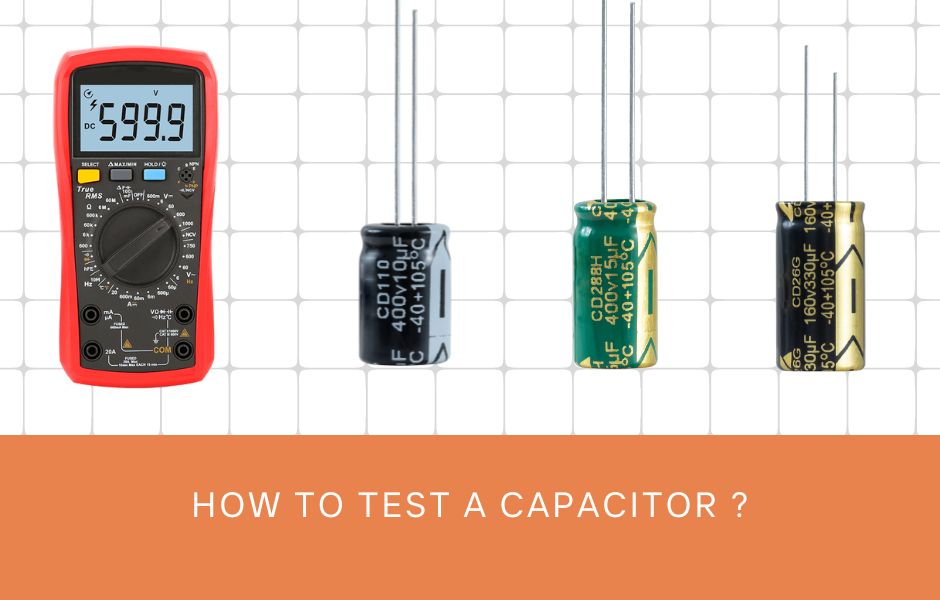
❓ How to test a capacitor?
You can test a capacitor using a multimeter, capacitance meter, or ESR meter to check its condition.
❓ How to tell if a capacitor is bad?
Common signs include bulging, leakage, high ESR, or failure to hold charge.
🔹 Conclusion
A capacitor is an essential electronic component used to store and regulate electrical energy in modern circuits. From power supplies to air conditioning systems, its ability to charge and discharge quickly makes it indispensable in electronics.
Understanding what a capacitor is, how it works, and where it is used can help you design better circuits and choose the right components for your application.