FAQ

Precautions for using film capacitors

A film capacitor is a capacitor in which a metal foil is used as an electrode, and a plastic film such as polyethylene, polypropylene, polystyrene or polycarbonate is overlapped from both ends and then wound into a cylindrical structure. The following are the precautions for using film capacitors: 1. Working voltage The choice of film capacitor [...]
2020-07-30T01:08:39+00:00Categories: FAQ|Tags: |Comments Off on Precautions for using film capacitors

Super capacitor classification method

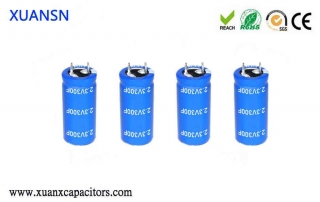
Super capacitor refers to a new type of energy storage device between traditional capacitors and rechargeable batteries. It not only has the characteristics of fast charging and discharging of capacitors, but also has the energy storage characteristics of batteries. The Super capacitor classification method is: First, according to different energy storage mechanisms, supercapacitors can be divided [...]

2020-07-28T01:36:45+00:00Categories: FAQ|Tags: |Comments Off on Super capacitor classification method

The difference between DC capacitor and AC capacitor

1. The difference between DC capacitor and  AC capacitor is whether the capacitor has polarity (that is, it has positive and negative poles) or no polarity. 2. DC capacitor has polarity AC capacitor has no polarity. Polarized capacitors cannot be connected to AC circuits because of their positive and negative polarities. Non-polarized capacitors can be connected [...]

2020-11-11T07:58:16+00:00Categories: FAQ|Tags: |Comments Off on The difference between DC capacitor and AC capacitor

Fault handling of capacitors:

As a reactive power compensation device, power capacitor is an important equipment for safe operation of power grid. However, in actual applications, due to human factors and environmental factors, the capacitor frequently fails during operation, which affects normal work. This article introduces several common Fault handling of capacitors method. Fault handling of capacitors 1. When the capacitor explodes [...]

2020-07-21T01:27:54+00:00Categories: FAQ|Tags: |Comments Off on Fault handling of capacitors:

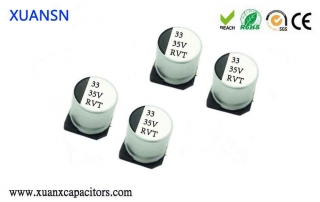
SMD electrolytic capacitors lifetime

For example,SMD electrolytic capacitors lifetime on the surface of the chip electrolytic capacitor, a temperature data will be marked, such as 125 and so on. This temperature represents the maximum temperature that the capacitor can withstand. At this maximum temperature, the capacitor generally can only guarantee about 1000 hours of normal operation. Through this temperature value, [...]

2020-11-19T06:54:48+00:00Categories: FAQ|Tags: |Comments Off on SMD electrolytic capacitors lifetime

Title

Go to Top