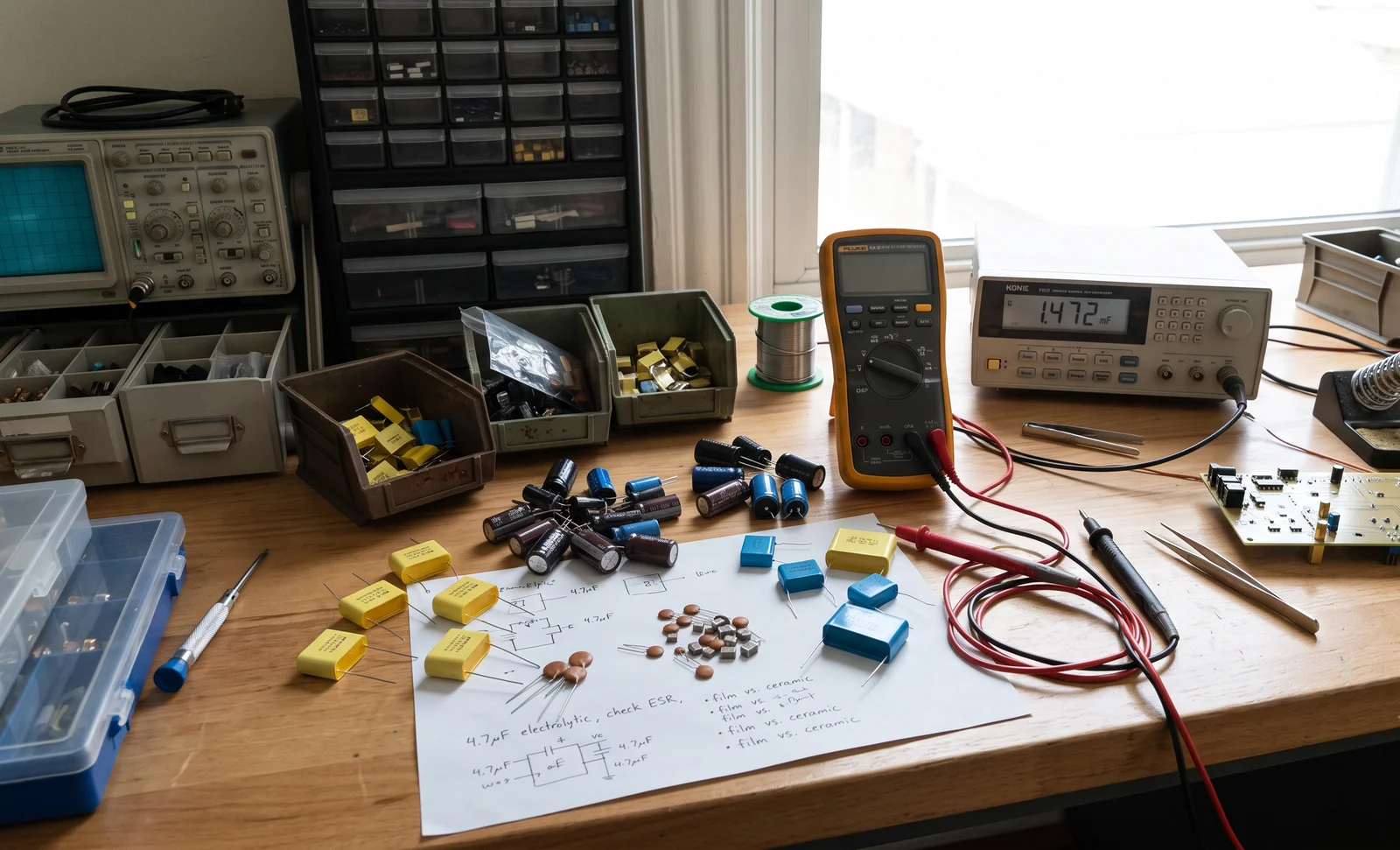
Capacitors do three jobs inside a switching power supply – smoothing the rail, decoupling the load and storing energy across the switching gap. In AI servers those jobs get harder: higher ripple current, faster switching and tighter rails push the capacitor to its limit.
AI-optimized servers are forecast to consume 175 TWh in 2026, up 84% in a year, as we covered in our look at AI server power demand. This article is about the component that quietly holds the power stage together: the capacitor.
Most engineers can name what a capacitor does. Fewer can say why it becomes the first part to fail in a high-density power supply. Let’s fix that.
Three Jobs Every Capacitor Does in a PSU
In a switching power supply, the capacitor is doing three things at once:
- Smoothing the rail. After the rectifier, the capacitor holds the voltage up between switching pulses. The larger the capacitance, the less the rail sags.
- Decoupling (bypassing). Every time a chip switches, it demands a sudden burst of current. The capacitor near the load supplies that burst locally, keeping the rail from dipping.
- Energy storage across the switching gap. In the converter, energy is chopped and transferred in pulses. Capacitors store the energy between those pulses so the output stays steady.
A capacitor is not a passive part in a modern PSU – it is doing active work every microsecond.
Why AI Power Stages Push Capacitors to the Edge
The numbers translate directly into harder conditions for every capacitor in the chain:
- Higher ripple current – ripple current heats the capacitor from the inside. More current means more heat, and heat is what kills lifetime.
- Higher switching frequency – as converters shrink, frequency rises, and the capacitor needs lower ESR to stay cool at that frequency.
- Tighter rails – AI accelerators tolerate less voltage deviation, so the capacitor must hold the rail under bigger, faster load steps.
- Temperature – capacitor lifetime follows the Arrhenius rule: roughly halving for every 10 °C rise in core temperature. In a dense rack, ambient heat and self-heating add up fast.
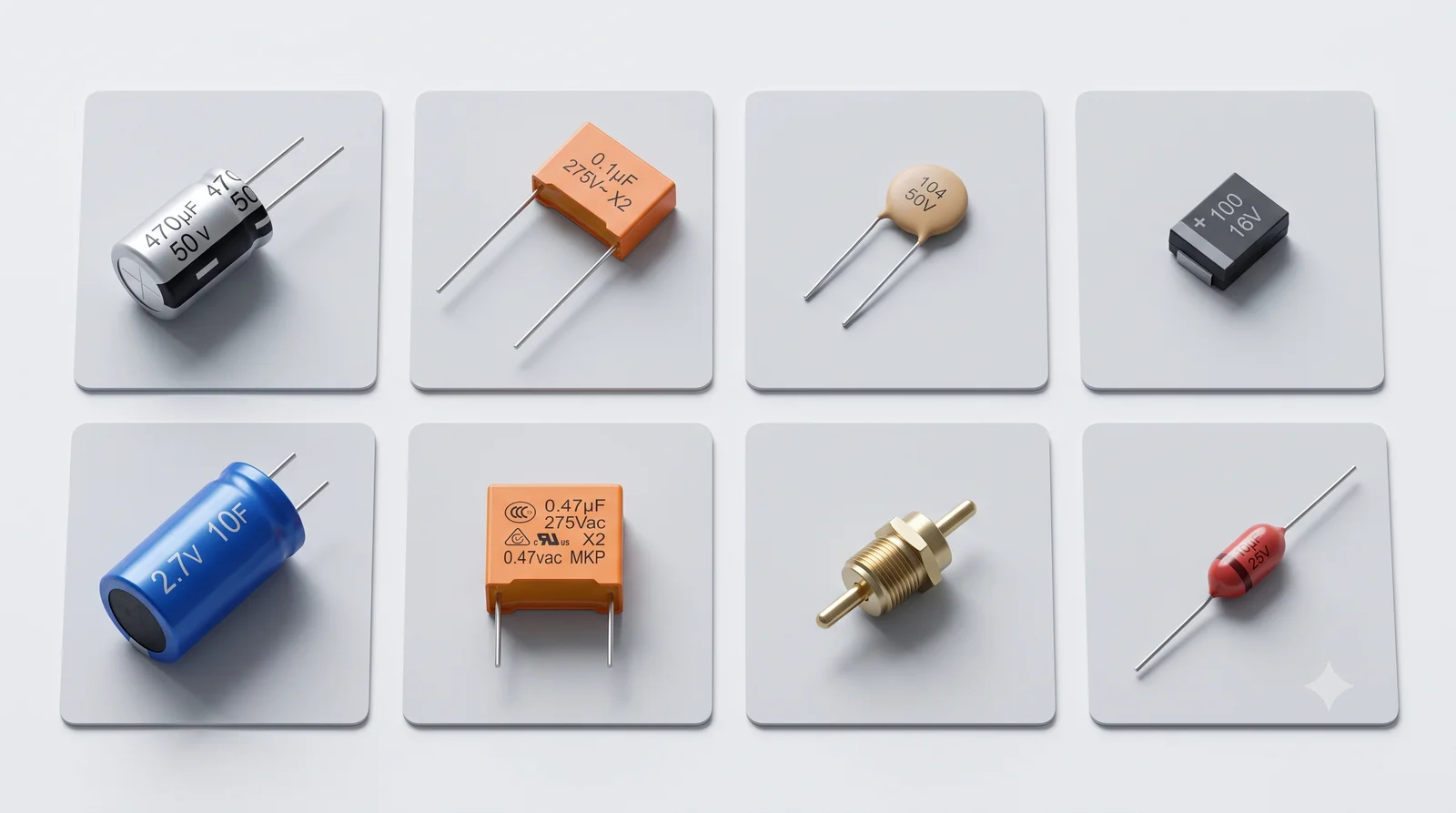
This is why a capacitor that was fine in the previous generation can become the failure point in the next. That same pressure reaches the capacitors across the AI power chain – supercapacitors for backup bursts, film capacitors in the DC-link, and electrolytic capacitors on the bulk bus.
What to Look For When You Are Sourcing
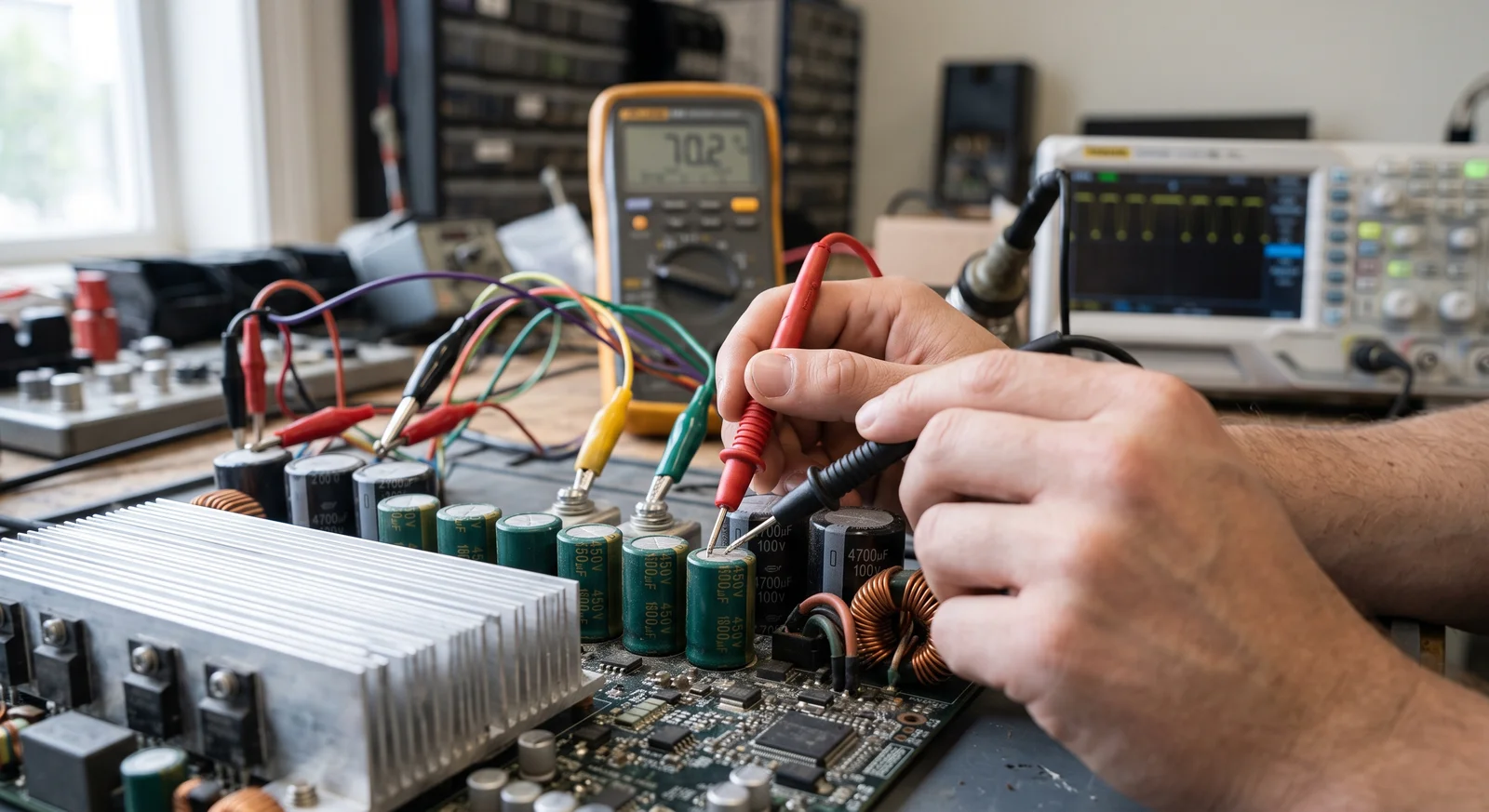
If you are specifying capacitors for a power design, the parameters that matter most are:
- Ripple current rating – can the part handle the current it will actually see?
- ESR at the switching frequency – lower ESR means less self-heating and less ripple voltage.
- Lifetime at your operating temperature – datasheet lifetime (e.g. 2,000 h) is quoted at a rated temperature; derate it to your real ambient.
- Manufacturer data – the part is only as good as the test data behind it. Xuansn publishes ripple and lifetime data for every capacitor series. Our capacitor types guide walks through choosing the right type.
A capacitor that meets the right capacitance but ignores these will be the component that fails in the field.
Common Questions About Capacitors in Switching Power Supplies
Why does a capacitor fail first in a power supply?
Capacitors carry ripple current and run hot; heat accelerates electrolyte loss and wear. In a dense supply they often hit their thermal limit before other components, so lifetime is the parameter to check first.
What is ESR and why does it matter?
ESR (equivalent series resistance) converts ripple current into heat. Lower ESR at the switching frequency means less self-heating, less ripple voltage, and a longer-lived part.
How do I choose between electrolytic, film and ceramic?
Use aluminum electrolytic for bulk energy and hold-up, film for DC-link and ripple-heavy positions, and ceramic for high-frequency decoupling. Feedthrough capacitors handle EMI at the power entry. The choice follows the job each stage needs.
What to Read Next
We will cover which capacitor types fit AI server power stages – electrolytic, film, ceramic and super. If you are sourcing power components right now, you can send us your requirement.
Need capacitors for high-power switching supplies? Xuansn Capacitor manufactures aluminum electrolytic, film and supercapacitor parts – our engineers will reply within 24 hours with feasibility and a quote.
✉ [email protected] | ☎ +86-769-8166 8821 | Send your specification
Sources: Gartner data center electricity forecast, June 2026.