Capacitor prices are rising in 2026 because AI data centers are consuming far more passive components than the supply chain planned for, while manufacturers move capacity toward high-value parts and let lead times stretch. For buyers, the practical response is to secure volume early, qualify a second source, and re-examine which parts can be substituted.
In July 2026 Yageo raised prices across its capacitor lines by roughly 50 percent — the broadest single increase the passive components market had seen in years. It was not an isolated move. MLCC lead times have stretched toward ten months on AI server demand, aluminium electrolytic prices are climbing on data-center consumption, and market trackers now put the average capacitor price increase for 2026 at around 30 percent. If you buy capacitors in volume, the question is no longer whether prices will rise, but how to keep your bill of materials and your margins intact.
This is the first article in our series on the AI-driven capacitor price cycle. The next two cover how to select and lock in orders during a rising market, and how to weigh substitute and domestic alternatives.
What Changed in the Capacitor Market in 2026
For most of the past decade, capacitors were a buyer’s market. Distributors held stock, prices drifted down, and a design engineer could swap a part without a second thought. That has reversed in a single cycle.
| Signal | What happened | When |
|---|---|---|
| Yageo capacitor increase | Broad price rise across capacitor lines, reported at roughly 50 percent | Announced for 1 July 2026 |
| MLCC lead times | Stretched toward ten months on AI server demand | August 2026 |
| Average capacitor price increase | Around 30 percent across the year | 2026 |
| Aluminium electrolytic | Prices rising on data-center consumption and foil supply | 2026 |
| Supplyframe Commodity IQ | Flagged an imminent shift in capacitor pricing | April 2026 |
The pattern is the one that hit semiconductors in 2021: a demand shock from a single end market, a supply base that cannot add capacity quickly, and a spot market that amplifies the gap. Passive components take longer to expand than most buyers assume. Ceramic powder, aluminium foil and film lines are capital-intensive, and a new line has to be qualified before it ships a production part.
The Three Forces Driving the Capacitor Price Increase
AI servers rewrote the demand curve
A single AI server board carries far more capacitors than a conventional server board. High-power GPU rails need dense MLCC arrays to hold voltage ripple at hundreds of amps, the 48 V intermediate bus needs bulk electrolytics and polymer parts, and the hold-up circuit adds more on top. Multiply that by the build-out of AI data centers and you get a demand step the passive components industry did not size for. AI server power demand is the single biggest driver behind the current increase.
Capacity moved to high-value parts
When demand outruns supply, manufacturers do the rational thing: they prioritise the parts with the best margin. Automotive-grade and high-reliability MLCCs, long-life aluminium electrolytics, and specialty film parts get the capacity, while commodity grades are squeezed. Buyers of standard parts then face the worst of both worlds — higher prices and longer waits, with no design change to show for it.
Lead times, allocation, and the spot market
As lead times extend, allocation appears. Once a supplier starts allocating, buyers who did not forecast early get partial shipments, and the shortfall is filled on the spot market at a premium. That premium then feeds back into contract negotiations. MLCC lead times approaching ten months mean a part ordered today may not arrive until next year, which pushes buyers to order earlier than they need — and early ordering itself tightens supply further.
Which Capacitor Types Are Rising Fastest
| Type | What is happening | Who feels it most |
|---|---|---|
| MLCC | Tightest market; AI server demand, ten-month lead times, commodity grades allocated | AI servers, networking, industrial boards |
| Aluminium electrolytic | Prices rising on data-center demand and aluminium foil supply | PSUs, 48 V and 800 V power, industrial |
| Film | Firmer pricing on EV, solar and DC-Link demand | EV, energy storage, motor drives |
| Supercapacitor | Growing demand for BBU and hold-up; fewer qualified suppliers | Data center UPS, short-term backup |
Not every type moves together. MLCC is where the shortage is sharpest. Aluminium electrolytic is being pulled up by the same AI data-center demand. Film is firmer but less acute. Supercapacitors are still a smaller market with their own supply constraints. If your BOM is heavy in MLCC, you are exposed to the fastest-moving part of the increase, and that is where procurement attention pays off first.
How to Protect Your BOM in a Rising Market
A price increase is a procurement problem before it becomes an engineering problem. The buyers who come through a rising market well are the ones who act before allocation starts.
Forecast further out and commit earlier. Extend your demand forecast from a quarter to two or three quarters and share it with your supplier. Suppliers allocate to the customers who give them visibility. A forecast is not a purchase order, but in a shortage it is the currency of allocation.
Qualify a second source before you need it. A second source is worth little if you start qualifying it during a shortage. Begin now, on the parts with the longest lead times, and keep the qualification live.
Re-examine your specifications. Over-specified parts are the easiest place to find cost. If a design carries an automotive-grade MLCC where a standard grade would do, or a 125°C part where 105°C is enough, that specification is paying the shortage premium for no benefit. Our guide to selecting capacitors for AI server power stages walks through matching the part to the rail rather than to habit.
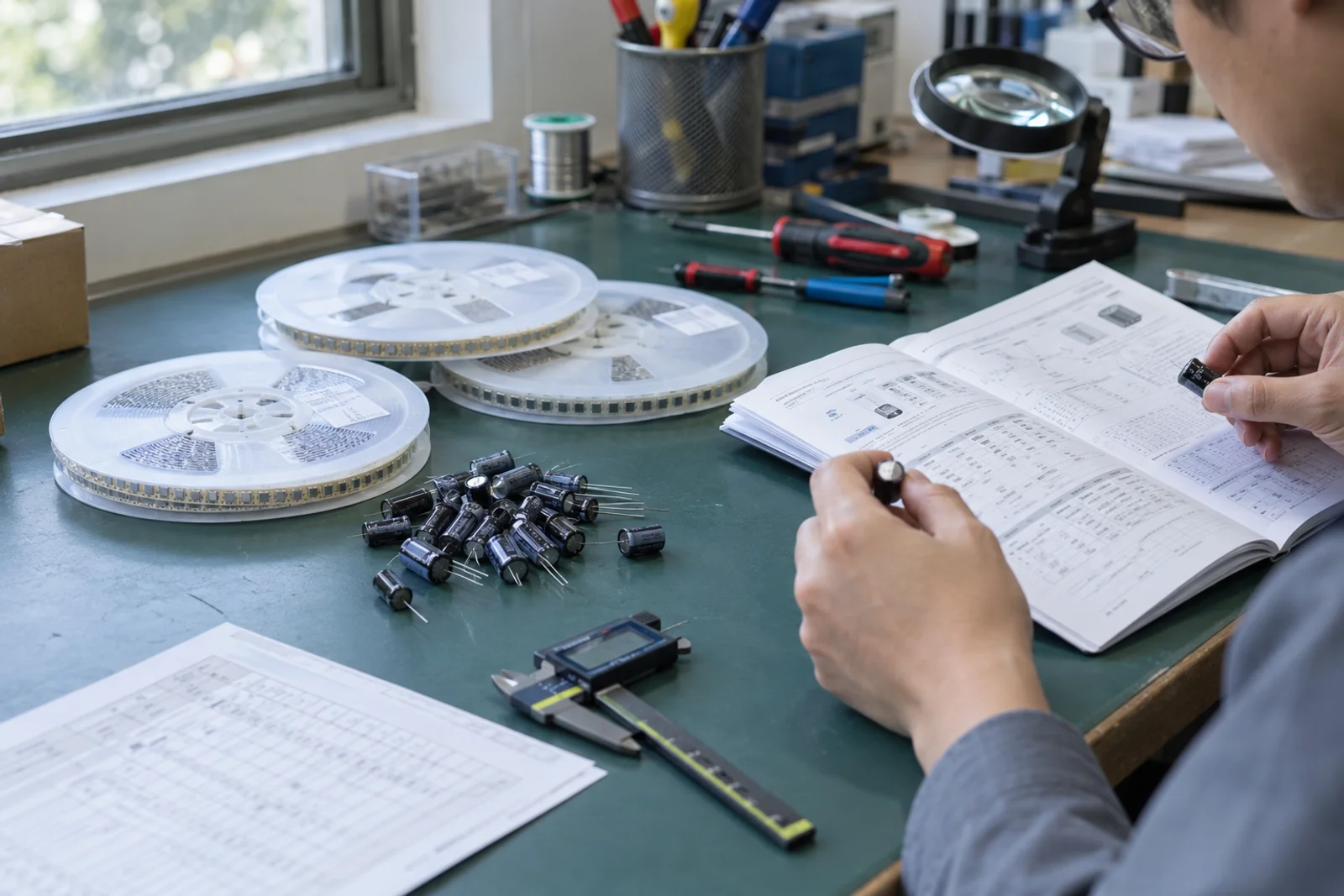
Use the right type for the rail. Part of the pressure on MLCC comes from designs that use ceramics where an electrolytic or a polymer part would work. Revisiting the choice between multilayer ceramic capacitors and aluminum electrolytic capacitors can move a BOM off the tightest part of the market.
Build a small buffer deliberately. A modest safety stock on your longest-lead parts is cheaper than a line stop. Size it from real lead-time risk rather than hoarding, and review it monthly while allocation is in force.
What This Means for Long-Term Sourcing
The 2026 increase is unlikely to be a one-quarter event. AI data-center build-out is a multi-year trend, and the passive components capacity needed to serve it takes years to come online. Even as new capacity arrives, prices rarely return to where they started; they settle at a new level.
That changes what a good supplier looks like. Price still matters, but so does allocation history, willingness to hold buffer stock on your behalf, and the ability to offer a genuine substitute when a part is short. A supplier who can move you from a constrained MLCC to a qualified alternative, or from a premium part to a correctly specified one, is worth more in a rising market than a supplier with a lower list price and no stock.
Xuansn has supplied capacitors through previous shortage cycles, and we quote against the actual specification and volume you need rather than a catalogue headline. Send us your BOM and target price and we will confirm availability, lead time, and a substitute where one exists.
FAQ: Common Questions About the 2026 Capacitor Price Increase
Will capacitor prices fall again in 2026 or 2027?
Some grades may ease as new capacity comes online, but a return to 2024 pricing is unlikely while AI data-center demand keeps growing. Expect prices to plateau at a higher level rather than fall back to where they were.
Why are MLCC prices rising faster than aluminum electrolytic?
MLCC sits closest to the AI server demand shock and has the longest lead times, so it moved first and hardest. Aluminium electrolytics are being pulled up by the same data-center demand and by aluminium foil supply, but the shortage is less acute.
Should I lock in a full year of supply now?
Locking volume on your longest-lead and highest-exposure parts usually pays for itself. Locking everything for a year can leave you holding stock you cannot use if demand softens. Commit where the lead-time risk is real, and stay flexible elsewhere.
Can I substitute one capacitor type for another to control cost?
Often yes, but only after checking the electrical and thermal requirements. Moving from MLCC to a polymer or aluminium electrolytic part is sometimes viable on bulk rails, while a timing or RF circuit may not tolerate the change. Qualify any substitute on the bench before it reaches production.
Send your bill of materials and target price to our team, and we will come back with availability, lead time and a costed alternative where one exists.