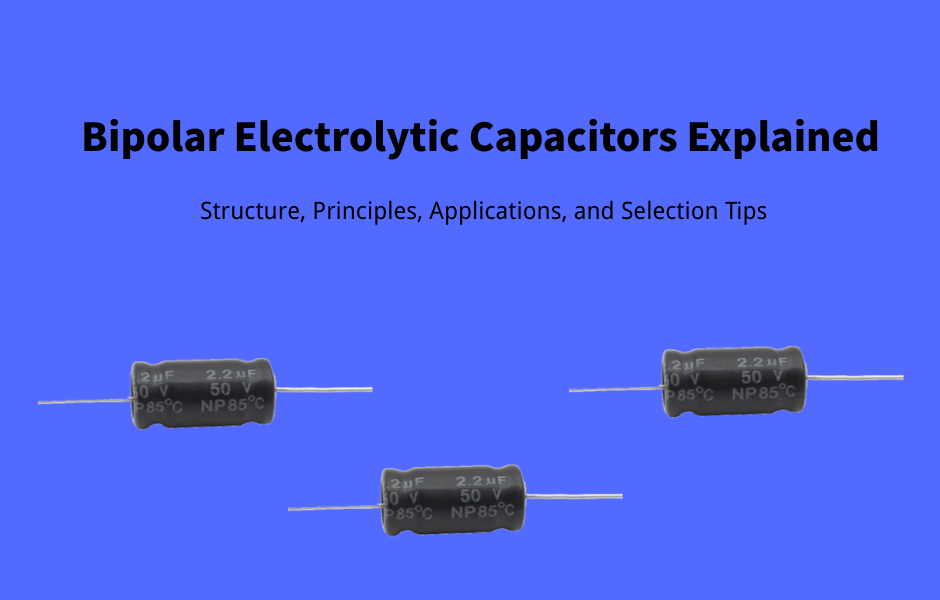
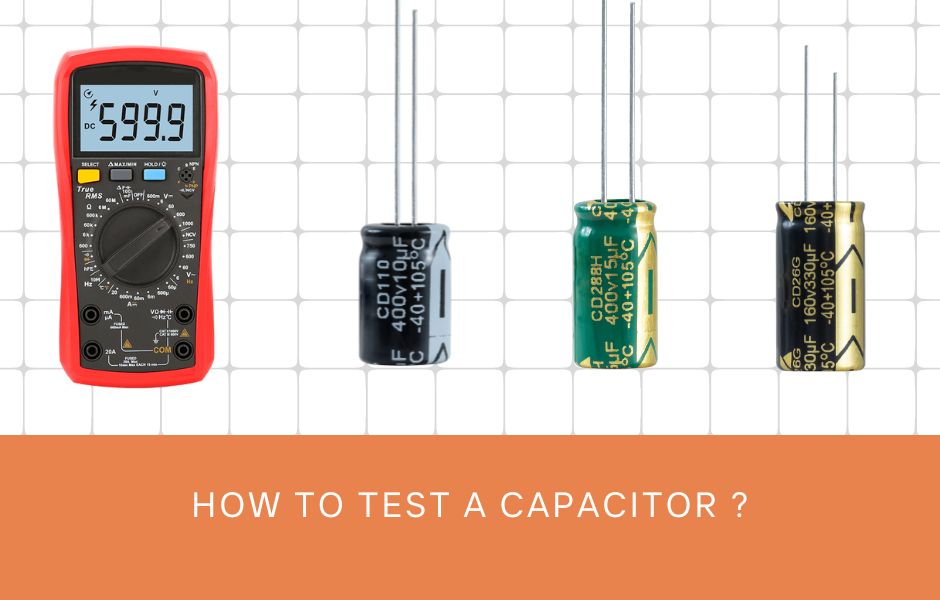
1.What Is an Electrolytic Capacitor?
Electrolytic capacitors are essential components in modern electronics, widely used for energy storage, voltage stabilization, and filtering. But what exactly is an electrolytic capacitor, and how does it work? In this guide, we’ll explain everything you need to know, including types, structure, applications, and best practices for using these critical components in industrial, automotive, and consumer electronics worldwide.
In simple terms:
An electrolytic capacitor is a polarized electronic component that stores electrical energy and smooths voltage in circuits requiring high capacitance, making it ideal for power supplies, LED drivers, automotive electronics, and industrial systems.
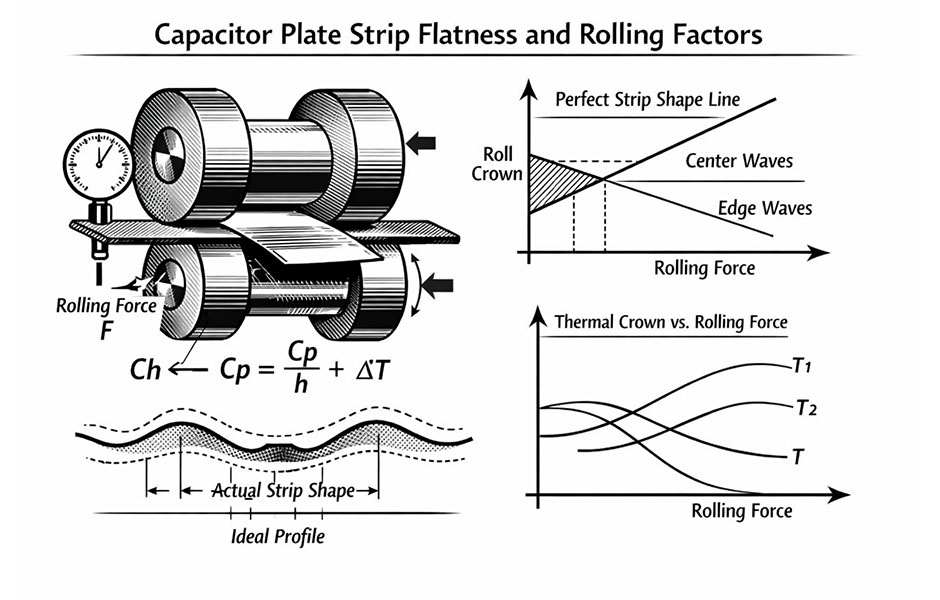
2.How Does an Electrolytic Capacitor Work?
An electrolytic capacitor is a type of capacitor that stores and releases electrical energy to stabilize voltage in electronic circuits. It consists of a metal anode, a thin oxide layer that acts as the dielectric, and an electrolyte serving as the cathode. When voltage in the circuit rises, the capacitor charges and stores energy in its electric field, like filling a small energy reservoir. When the voltage drops, it discharges the stored energy back into the circuit, smoothing out voltage fluctuations and reducing ripple. This continuous process of charging and discharging is how electrolytic capacitors work to provide a steady and reliable power supply, making them essential components in power supplies, LED drivers, industrial electronics, automotive systems, and other devices requiring stable energy.
3.Structure of an Electrolytic Capacitor
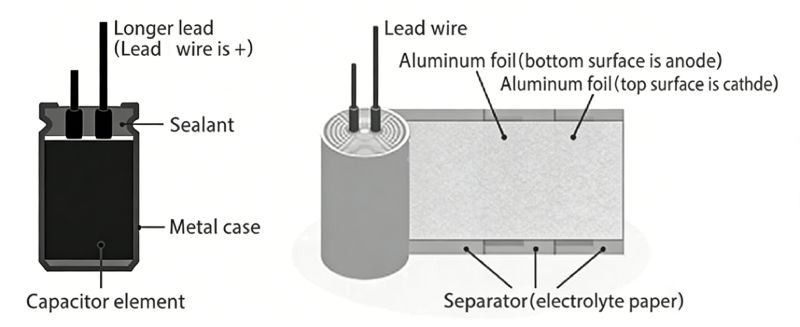
The structure of an electrolytic capacitor is carefully designed to provide high capacitance in a compact size. At its core, it consists of a metal anode (usually aluminum or tantalum), a thin oxide layer acting as the dielectric, and an electrolyte that. The anode is often etched or roughened to increase its surface area, whstore large amounts of energy even in small dimensionsseparator prevents direct contact between the anode and the electrolyte while allmetal can or plastic casing with clearly marked positive and negative terminals, as electrolytic capacitors are polarized. This unique internal structure not only enables efficient energy storage and voltage smoothing, but also provides a self-healing property, where the electrolyte helps repair minor damage to the dielectric. Understanding the internal structure of an electrolytic capacitor is essential for engineers and designers who need reliable high-capacitance capacitors for power supplies, LED drivers, automotive electronics, and industrial systems.
The structure of aluminum electrolytic capacitors determines their high capacitance and energy storage capabilities. To explore the principle and production process behind these capacitors, check out: Principle of Aluminum Electrolytic Capacitors and Production
4.Types of Electrolytic Capacitors
Electrolytic capacitors are fundamental components in modern electronic systems, widely used for energy storage, voltage smoothing, and signal filtering. To fully understand what is an electrolytic capacitor, it is not enough to know its definition—its classification also plays a critical role in determining how it performs in real-world applications.
In practice, electrolytic capacitors are classified based on two key dimensions:
- Material composition, which determines electrical performance
- Package and mounting type, which determines mechanical integration
This dual classification reflects the trade-off between performance requirements and physical design constraints, which is essential for engineers when selecting components.
1. Classification by Material
The material used in the anode and electrolyte directly influences the capacitor’s capacitance density, leakage current, stability, lifespan, and frequency characteristics. Among all types, aluminum and tantalum electrolytic capacitors are the most widely used in the industry.
Aluminum Electrolytic Capacitors
Aluminum electrolytic capacitors are the most common and cost-effective solution for applications requiring high capacitance values. Structurally, they consist of etched aluminum foil as the anode, a thin aluminum oxide layer as the dielectric, and a liquid or solid electrolyte that serves as the cathode.
From an engineering perspective, their biggest advantage lies in their ability to deliver very high capacitance within a relatively small volume, making them ideal for bulk energy storage and power conditioning.
Performance:
- High capacitance-to-volume ratio, suitable for large energy storage
- Capable of handling relatively high voltage levels
- Effective for low-frequency filtering and ripple suppression
Characteristics:
- Limited operational lifespan due to gradual electrolyte evaporation
- Performance degradation under high temperature and high ripple current conditions
- Higher leakage current compared to solid-state capacitors
Because of these characteristics, aluminum electrolytic capacitors are extensively used in:
- Power supply circuits (AC-DC and DC-DC conversion)
- Industrial equipment and motor drives
- LED lighting systems and consumer electronics
Tantalum Electrolytic Capacitors
Tantalum electrolytic capacitors are designed for applications that require higher stability, reliability, and compact size. They use tantalum metal as the anode and a solid electrolyte, typically manganese dioxide or conductive polymer.
Compared to aluminum capacitors, tantalum capacitors offer more consistent electrical characteristics over time, making them suitable for precision and sensitive electronic systems.
Performance:
- Excellent capacitance stability across temperature and time
- Low leakage current, beneficial for low-power circuits
- Superior performance in higher-frequency applications
Characteristics:
- Smaller size for equivalent capacitance values
- Higher reliability under controlled conditions
- More expensive due to material cost
- Sensitive to surge voltage and reverse polarity, which may lead to failure
These capacitors are commonly found in:
- Smartphones, tablets, and portable electronics
- Medical devices and instrumentation
- Automotive electronics and aerospace systems
2. Classification by Package and Mounting Type
While material determines electrical performance, the package and mounting style define how the capacitor is physically integrated into a circuit. This is especially important in modern electronics, where space constraints and automated manufacturing play a major role.
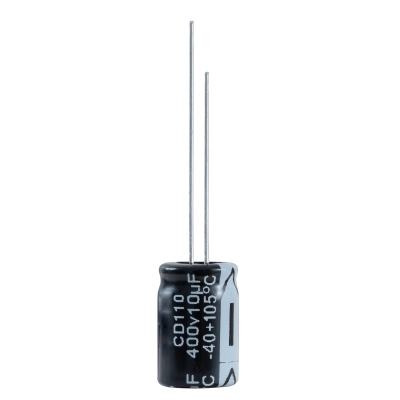
Radial Electrolytic Capacitors
Radial electrolytic capacitors have two leads emerging from the same end of the component, allowing them to be mounted vertically on a printed circuit board.
This design is highly compatible with modern PCB layouts and automated assembly processes, making radial capacitors the most widely used package type today.
Integration:
- Through-hole mounting with vertical orientation
- Strong mechanical stability on PCB
- Suitable for automated insertion processes
SMD (Surface Mount) Electrolytic Capacitors
SMD electrolytic capacitors are designed for surface mounting directly onto PCBs without the need for through-hole leads. This makes them essential for modern electronics where miniaturization and high-density layouts are required.
Their compatibility with automated pick-and-place machines significantly improves manufacturing efficiency.
Integration:
- Surface mount technology (SMT)
- Optimized for compact and high-density PCB designs
- Enables fully automated production
5.Applications of Electrolytic Capacitors
Electrolytic capacitors are essential components in modern electronics, providing stable voltage, energy storage, and support for transient currents. Their high capacitance and reliability make them widely used across industrial, automotive, consumer, and audio electronics worldwide.
- Power Supply Circuits: Rectification, filtering, and smoothing AC ripple in sw.
- DC Link & Energy Storage: In inverters, motor drives, and frequency converters, capacitors store instantaneous energy and sup
- Audio Equipment: Used for signal coupling, decoupling, and bass frequency filtering in speakers, power amplifiers, and preamps.
- Consumer Electronics: Motherboards, TVs, refrigerators, air conditioners, and chargers rely on electrolytic capacitors for voltage stabilization and transient current support.
- Automotive Electronics: Capacitors in car battery management systems, ignition circuits, and on-board power modules (low ESR types preferred).
- Industrial Control: Used in PLCs, servo drives, and industrial power distribution for anti-interference and voltage holding.
6.How to Identify Polarity in Electrolytic Capacitors
Most electrolytic capacitors are polarized, meaning connecting them backward can cause bulging, leakage, explosion, or permanent damage. Methods to identify polarity include:
- Marked Negative Stripe: Aluminum shell often has a silver/black vertical stripe with a “-”, indicating the negative pin.
- Pin Length (Radial Type): Longer lead = positive (+), shorter lead = negative (-).
- PCB Silkscreen: Circuit boards mark “+” for positive, hollow or outlined pad for negative.
- SMD Capacitors: Color bar or square mark indicates the negative electrode.
- Datasheet Verification: For high-voltage or special models, always cross-check polarity with the manufacturer datasheet.
Correctly identifying polarity in electrolytic capacitors is vital for circuit reliability and safety. For a deeper understanding of why polarity matters and its effects in electronic circuits, you can read our detailed guide: Understanding Capacitor Polarity: Unveiling Its Significance in Electronic Circuits
7.Common Failures and Lifespan
Electrolytic capacitors have a limited lifespan due to the nature of their electrolyte and dielectric materials. Understanding common failure modes and aging factors is critical to ensure reliable operation in power supplies, automotive electronics, LED drivers, and industrial equipment.
7.1 Standard Lifespan
- General aluminum electrolytic capacitors: 1,000–5,000 hours at rated temperature (85–105℃).
- High-temperature / long-life models: 10,000–20,000 hours; lifespan halves with every 10℃ increase above rated temperature.
7.2 Common Failure Modes
- Electrolyte Drying: Loss of internal electrolyte → capacitance drops, ESR rises → ripple increases, circuit instability.
- Bulging & Bursting: Reverse polarity, overvoltage, or overheating → internal gas expansion → top vent bulges or ruptures.
- Leakage & Corrosion: Electrolyte seeps out → corrodes PCB pads and nearby components.
- Short Circuit: Dielectric breakdown from overvoltage or aging → direct short → fuse burnout or board damage.
- Open Circuit: Lead detachment or internal drying → circuit loses power holding → equipment fails to start.
7.3 Main Causes of Aging
- Long-term over-temperature operation.
- Exceeding rated voltage or ripple current.
- Frequent hot-swap or instantaneous voltage spikes.
- Poor heat dissipation in enclosed equipment.
5. FAQ
Q1: Can I use an electrolytic capacitor in AC circuits?
A: Standard electrolytics are polarized and designed for DC. Use non-polarized electrolytic or film capacitors for AC.
Q2: What does low ESR mean?
A: Low ESR capacitors have lower internal resistance, improving high-current ripple filtering. Common in motherboard power modules and high-power chargers.
Q3: Can I replace a bulging capacitor with a higher voltage model?
A: Yes, as long as voltage rating is equal or higher; keep capacitance the same. Do not use lower voltage than original.
Q4: Why do capacitors fail in high-temperature devices?
A: Heat accelerates electrolyte volatilization and dielectric aging. Heat dissipation design directly affects actual service life.
6. Conclusion
What Is an Electrolytic Capacitor? It is a low-cost, high-capacitance component vital for energy storage and voltage stabilization in modern electronics. Correct polarity, voltage derating, and thermal management are key for long-term reliability.
Xuansn offers globally shipped, ISO-certified aluminum and tantalum electrolytic capacitors for engineers and electronics manufacturers in the US, Europe, Brazil, and Asia. Contact us for high-quality capacitors to power your devices safely and efficiently.