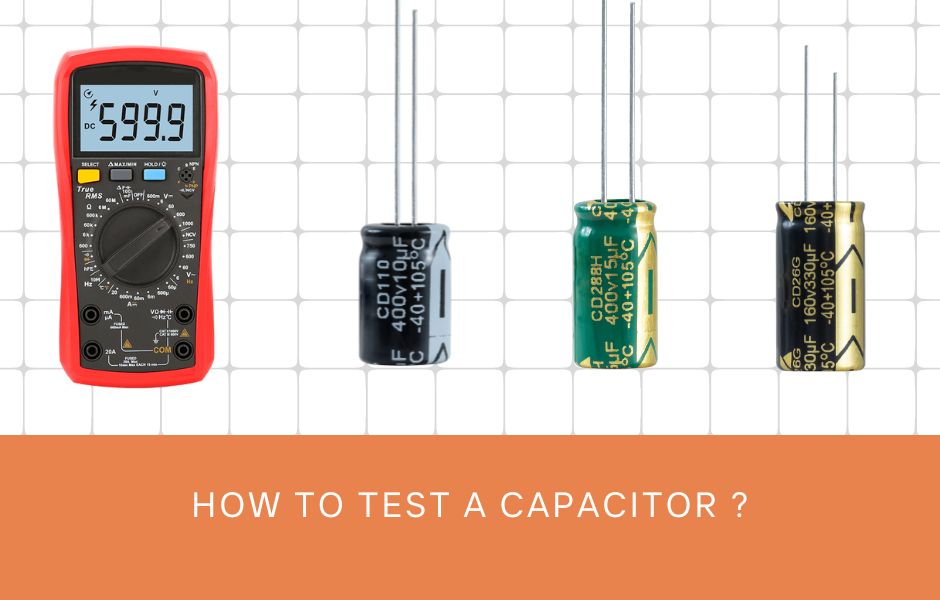
The uses of capacitors include energy storage, voltage smoothing, noise filtering, signal coupling and decoupling, timing control, and power conditioning. Capacitors are widely used in power supplies, automotive electronics, LED lighting, industrial equipment, renewable energy systems, and computer motherboards.
Introduction
The uses of capacitors are essential to modern electronics, making capacitors one of the most widely used passive components in electrical and electronic systems.
From simple household devices to complex industrial machinery, the uses of capacitors span across nearly every industry. They play a key role in ensuring stable voltage, efficient energy transfer, signal integrity, and reliable system performance.
Understanding the different uses of capacitors is crucial for engineers, designers, and buyers, as choosing the right capacitor directly affects the performance, lifespan, and safety of electronic systems.
What Are the Main Uses of Capacitors in Circuits?
The uses of capacitors in circuits go far beyond merely storing electrical energy. Capacitors are versatile, multifunctional components that play a critical role in regulating voltage, filtering noise, stabilizing power supplies, coupling and decoupling signals, and controlling timing and frequency. By efficiently storing and releasing energy, capacitors help protect sensitive components from voltage spikes, reduce electromagnetic interference (EMI), improve signal integrity, and enhance overall circuit performance. They are essential in nearly every type of electronic system, from consumer electronics and computers to automotive electronics, industrial machinery, LED lighting, and renewable energy systems, ensuring reliable and stable operation under a wide range of conditions.
🔋 1. Energy Storage
One of the most fundamental uses of capacitors in circuits is storing electrical energy in an electric field. Unlike batteries, which store energy chemically and release it slowly, capacitors can charge and discharge almost instantaneously, providing short bursts of energy when needed.
How It Works:
A capacitor stores energy by accumulating opposite charges on two conductive plates separated by a dielectric material. When a load requires energy, the capacitor releases the stored charge quickly, helping maintain voltage stability in the circuit.
Typical Applications:
- Backup power for memory modules in electronics
- Flash circuits in cameras
- Pulse power systems in industrial machinery
- Energy harvesting devices and regenerative systems in electric vehicles
Recommended Capacitor Types:
- Supercapacitors for high-capacity, rapid discharge applications
- Film or ceramic capacitors for low-power, fast-response circuits
Design Tips:
- Ensure voltage rating exceeds operating voltage by 20–50%
- For high-frequency pulses, low ESR capacitors improve efficiency and reduce heat
🔌 2. Voltage Smoothing
Capacitors are widely used for voltage smoothing, especially in power supplies. After AC power is converted to DC, the output often contains ripples—small voltage fluctuations—that can destabilize sensitive circuits. Capacitors absorb peaks and fill in dips, producing a stable DC voltage.
How It Works:
By acting as a reservoir, a capacitor stores excess voltage during peaks and releases it during dips. In switching power supplies, low-ESR capacitors also help filter high-frequency noise, improving efficiency and preventing voltage spikes.
Typical Applications:
- Switching Mode Power Supplies (SMPS)
- AC-DC adapters
- Solar inverters and battery chargers
- LED driver circuits
Recommended Capacitor Types:
- Aluminum electrolytic capacitors for bulk filtering
- Ceramic for high-frequency decoupling
Design Tips:
- Combine bulk and bypass capacitors for best results
- Ensure proper layout on PCB to minimize inductance
🌊 3. Noise Filtering & EMI Suppression
Electronic circuits generate unwanted noise that can interfere with performance. Capacitors are a key component in filtering this noise and suppressing electromagnetic interference (EMI), ensuring signals remain clean and reliable.
How It Works:
Capacitors provide a low-impedance path for high-frequency noise, effectively bypassing it to ground while allowing desired signals to pass. This prevents noise from propagating through the power lines or signal paths.
Typical Applications:
- Audio amplifiers and signal processing circuits
- RF communication devices
- Digital microcontroller boards
- Automotive ECUs and infotainment systems
Recommended Capacitor Types:
- Ceramic capacitors for high-frequency filtering
- Film capacitors for industrial EMI suppression
Design Tips:
- Place decoupling capacitors as close as possible to IC power pins
- Use multiple capacitors in parallel to cover a wider frequency range
🔄 4. Signal Coupling & Decoupling
Capacitors control the way signals move through circuits, making them essential for signal integrity.
Coupling:
- Allows AC signals to pass from one stage to another while blocking DC
- Common in audio amplifiers, RF circuits, and ADC/DAC interfaces
Decoupling:
- Removes noise from power lines and stabilizes voltage at ICs
- Protects sensitive components from sudden current changes
Typical Applications:
- Microcontroller and FPGA boards
- Audio signal chains
- RF communication modules
- Sensor systems
Recommended Capacitor Types:
- Ceramic for high-frequency decoupling
- Film for precise analog signal coupling
Design Tips:
- Use a 0.1–0.01µF ceramic capacitor near each IC for high-speed digital circuits
- Combine decoupling and bulk capacitors for both high-frequency and low-frequency noise suppression
⏱ 5. Timing & Frequency Control
Capacitors are widely used with resistors to form RC (resistor-capacitor) circuits, which control timing and oscillation frequencies.
How It Works:
In an RC circuit, the capacitor charges and discharges through a resistor, creating predictable time delays or oscillations. This is the basis for timers, pulse generators, and oscillators.
Typical Applications:
- Timer circuits using 555 ICs
- PWM (pulse-width modulation) for motor and LED control
- Clock oscillators in microprocessors and digital systems
- Audio tone generation and waveform shaping
Recommended Capacitor Types:
- Ceramic for stable timing and frequency control
- Film capacitors for precision oscillators
Design Tips:
- Timing is proportional to T = R × C; choose components with tight tolerance
- Consider temperature stability for precision applications
Typical Uses of Capacitors Across Different Industries
The uses of capacitors vary widely across industries, but their core function remains the same: to store energy, stabilize voltage, filter signals, and improve system reliability. From consumer electronics to aerospace systems, capacitors play a critical role in ensuring performance, efficiency, and safety in modern technology.
📱 Uses of Capacitors in Consumer Electronics
In consumer electronics, the uses of capacitors are essential for maintaining stable operation and high-quality signal performance in compact and high-speed devices.
Typical Applications:
Filtering and decoupling in power supply circuits to smooth voltage fluctuations
Signal coupling and bypassing to ensure clean audio and video transmission
Timing and oscillation in RC circuits for clocks and control systems
Why It Matters:
Capacitors help prevent noise, voltage instability, and signal distortion in devices such as smartphones, laptops, TVs, and gaming systems.
Common Capacitor Types:
Ceramic capacitors for high-frequency decoupling
Tantalum capacitors for compact and stable performance
🚗 Uses of Capacitors in Automotive Industry (Especially EVs)
The automotive sector, particularly electric vehicles, relies heavily on advanced capacitor technologies.
Typical Applications:
Rapid energy storage and release in regenerative braking systems
Instant power support in start-stop systems
DC-link capacitors in motor drive controllers for voltage stabilization
Infotainment systems and airbag triggering circuits
Why It Matters:
Capacitors ensure reliability under extreme conditions such as high temperature, vibration, and voltage fluctuations.
Key Requirements:
High reliability and long lifespan
Resistance to heat and mechanical stress
Compliance with automotive standards (e.g., AEC-Q200)
🔋 Uses of Capacitors in Renewable Energy & Power Systems
Capacitors are critical in modern energy infrastructure, especially in renewable energy systems.
Typical Applications:
Filtering and smoothing in solar inverters and wind power converters
Power factor correction to improve energy efficiency
Energy buffering in high-voltage DC (HVDC) transmission systems
Advanced Functions:
Harmonic filtering to protect grid stability
Voltage regulation and transient suppression
Why It Matters:
Capacitors help increase system efficiency, reduce energy loss, and ensure stable integration of renewable energy into the grid.
🏭 Uses of Capacitors in Industrial Manufacturing & Automation
Industrial systems require capacitors that can handle high power, high voltage, and harsh environments.
Typical Applications:
Motor start and run capacitors in single-phase AC motors
Pulse power discharge in welding machines and laser equipment
Energy storage and voltage regulation in UPS systems
DC bus capacitors in variable frequency drives (VFDs) to suppress voltage spikes
Benefits:
Improved energy efficiency
Reduced downtime and maintenance
Enhanced system stability and performance
🏥 Uses of Capacitors in Medical Equipment
In medical technology, capacitors play a life-critical role where precision and reliability are essential.
Typical Applications:
Energy storage in defibrillators for delivering life-saving electric shocks
Timing pulses in pacemakers using miniature capacitors
High-voltage stabilization in X-ray and CT imaging systems
Why It Matters:
Capacitors ensure accurate operation, patient safety, and reliable performance in sensitive medical environments.
📡 Uses of Capacitors in Telecommunications & Aerospace
Capacitors are indispensable in high-frequency and high-reliability systems such as communication networks and aerospace equipment.
Typical Applications:
Resonance, impedance matching, and filtering in RF circuits (base stations, satellites)
Signal isolation and DC blocking (coupling/decoupling)
Temperature compensation and radiation-resistant capacitors in aerospace systems
Why It Matters:
These applications demand extreme precision, stability, and durability under harsh environmental conditions.
🏠 Uses of Capacitors in Home Appliances & Lighting
Capacitors are widely used in household appliances and lighting systems to improve efficiency and reliability.
Typical Applications:
Start capacitors in air conditioners and refrigerators
Motor operation in washing machines and fans
Power factor correction and EMI suppression in fluorescent lamps and LED drivers
Why It Matters:
Capacitors help reduce energy consumption, improve performance, and extend the lifespan of household devices.
How to Choose the Right Capacitor
Choosing the right capacitor ensures stable performance, efficiency, and long lifespan. The key is to match the capacitor’s specifications with your application.
🔑 Key Factors to Consider:
- Capacitance (μF / nF / pF)
Determines how much energy is stored.
👉 Power supply: higher capacitance | Signal circuits: lower capacitance - Voltage Rating
Should be 20%–50% higher than actual working voltage to avoid failure - ESR (Equivalent Series Resistance)
👉 Low ESR = better efficiency, less heat
Ideal for power supplies, LED drivers, automotive electronics - Temperature Rating
👉 85°C (general) / 105°C (industrial & automotive)
Lower temperature = longer lifespan - Capacitor Type
Electrolytic → power filtering
Ceramic → high frequency
Film → high voltage
Supercapacitor → energy storage - Ripple Current
High ripple applications require high ripple-rated capacitors
✅ Quick Tip
The best capacitor is not the most expensive one, but the one that fits your circuit requirements perfectly.
❓ FAQ About Uses of Capacitors
What are the main uses of capacitors?
The main uses of capacitors include energy storage, voltage smoothing, noise filtering, signal control, and timing in electronic circuits.
Why are capacitors important?
Capacitors ensure stable voltage, reduce noise, and improve circuit efficiency and reliability across all electronic systems.
Where are capacitors used?
They are used in electronics, automotive systems, industrial equipment, renewable energy, LED lighting, and computer hardware.
How do I choose the right capacitor?
Select based on voltage, capacitance, ESR, temperature, lifespan, and application requirements.
How long do capacitors last?
Depending on type and conditions, capacitors can last from a few years to over 10–15 years in industrial applications.
Can a bad capacitor damage a circuit?
Yes, a failed capacitor can cause instability, overheating, or damage to other components.
Conclusion
The uses of capacitors are fundamental to modern electronics, supporting everything from energy storage and voltage smoothing to noise filtering, signal control, and power management.
Whether in consumer electronics, automotive systems, industrial equipment, renewable energy, or LED lighting, capacitors ensure stable performance, improved efficiency, and long-term reliability.
Choosing the right capacitor is critical. By understanding different capacitor types, applications, and key parameters such as capacitance, voltage rating, ESR, and temperature, engineers and buyers can optimize both performance and cost.
👉 Looking for the right capacitor for your application?
We provide high-quality, cost-effective capacitor solutions with fast delivery and flexible support. Contact us today for expert guidance and a competitive quote.